Friday, 31 March 2017

Playlist of the Month: March '17

Vampire Weekend - Worship You


Slow Club - It Doesn't Have to be Beautiful


The Pixies- - Gigantic


Bellowhead - Fakenham Fair


The Clash - The Card Cheat


Sunday, 26 February 2017

Playlist of the Month: February '17

This month's Song Number One discovered courtesy of Wes Anderson's adaptation of Fantastic Mr Fox. 

The Bobby Fuller Four - Let Her Dance 


Regina Spektor - Grand Hotel


Santigold - Lights Out


Kate Bush - Suspended in Gaffa 


Ezra Furman - Restless Year


Top Five Whatever: Books


My current top five (stand-alone, not part of a series - this task would be damn near impossible otherwise) books.

Behind the Scenes at the Museum by Kate Atkinson


Image result for behind the scenes at the museum
Add caption


The first novel of Kate Atkinson (possibly better known for her later series commencing with Case Histories,) details the life of Ruby Lennox, a girl born in the early fifties to a dysfunctional family in York, interspersed with a series of non-linear flashback chapters detailing Ruby's family history dating back to her great-grandmother. The story takes us through two World Wars and their impact on the family, has a massive character count and is pretty blase about announcing its characters' deaths several chapters before they happen (it probably has the highest body count on this list, which is saying something).

Ruby's story takes us through her life from conception, detailing deaths in the family, house fires, disastrous weddings, dreary holidays and a series of other events. But there's something odd about Ruby's first-person account. Details and events that don't make sense, or odd, inexplicable things said by her family that aren't clarified to the reader. Over time, we get the impression that there's a significant detail we're missing, something that even Ruby herself doesn't seem to know about...

There's a consistent dark humour that narrates events, which despite the sheer amount of disasters that take place prevents the story from becoming maudlin or alienatingly grim. Not all deaths are treated with humour, however, and we eventually discover that some are presented in a much more hard-hitting way than others. Despite this, it doesn't come off as callous or insensitive, just very resigned to the knowledge of what kind of a story it is.

The Wish List by Eoin Colfer

Image result for the wish list eoin colfer
[X]

By the author better known for the Artemis Fowl series, The Wish List details the afterlife of Meg Finn, a troubled Irish teen killed in a gas explosion during a (reluctant) burglary attempt. With a perfectly balanced list of good and bad deeds to her name, she has the chance to get into heaven by returning to earth as a ghost to help Lowrie MacColl, the grumpy old man whose house she attempted to rob. Having lived a life full of regret, Lowrie concludes that his new ghostly assistant can help him complete his 'wish list', a bucket list of tasks that he believes will go some way towards righting the wrongs in his life.

To further complicate things, Meg's former partner in crime (who died in the same explosion) has been assigned the task of sabotaging her attempts and ensuring she winds up in hell.

This is aimed at a younger audience than most of the books on the list, falling somewhere between children's and YA novel (and I do feel like having the fourteen-year-old protagonist die in a horrific accident during a robbery attempt might be pushing the definition of 'children's book' just slightly.) It first caught my attention when I was somewhere in the early teens bracket, when someone gave me the audiobook.

It was the writing style that stood out to me the most. It's distinctly tongue-in-cheek in a way that occasionally strays into being grimly humorous, but also has its tender moments, particularly when dealing with the developing odd friendship between Meg and Lowrie, without tipping over into mawkish territory. It never talks down to its young target audience, a fact which resonated with me a lot at the time. The theme of redemption and second chances runs heavily throughout, both in Meg's effort to right past wrongs and with Lowrie's desire to finally turn his life around.

The representation of Christian afterlife is also played for laughs throughout. Among them such gems as the devil being depicted as a businessman focusing on quotas, and St Peter getting fed up with having to man the entrance to Heaven all the time. Both the protagonists too, in their own way, are flawed but still sympathetic - Meg's a snarky, occasionally insensitive teenager, but it's easy to root for her, knowing her history. Lowrie's a pessimistic, cantankerous old grouch, who gradually develops over the course of the story into someone more optimistic. Their personalities and the way they interact, combined with the darkly comic narration style, make this uniquely entertaining.

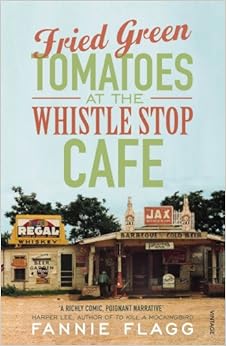
Fried Green Tomatoes at the Whistle-Stop Cafe by Fannie Fragg


Image result for fried green tomatoes book
[X]

The structuring of this one is, in an odd sort of way, similar to Behind the Scenes, to the point where if I was doing one of those "if you liked X you might also like Y" recommendation deals, I'd probably put them together. This one, too, has two major narratives, interspersing chapters of one 'present' storyline with another historical backstory, occasionally detailing snapshot-style chapters from the lives of side characters throughout generations.

The novel opens with Evelyn Couch, a depressed, out-of-sorts middle-aged woman meeting Ninnie Threadgoode, a cheery old lady in a nursing home who regales her with stories of her family history, primarily the story of Idgie Threadgoode and Ruth Jamison, two women who became romantically involved and ran a cafe in Depression-era Alabama.

The history chapters deal with multiple side characters as well as the protagonists, occasionally using a snapshot-style depiction of their lives and events, alternating between traditional narration, newspaper clippings and a local magazine. One of the major themes is of pre-Civil Rights movement racism. The main backstory plot, however, converges into one particular mystery: what, exactly, happened to Ruth's abusive ex-husband, who disappeared one night after driving up to the cafe?

This was adapted into film in 1991, and if you've seen the film, at the risk of sounding cliched, I'd recommend reading the book. The film, for the most part, keeps the major plot intact, but the fact that they cut out so many details makes it come off as a cliff's notes of the original (it's been suggested that it would have lent itself better to a mini-series). One of the film's major flaws is the way it downplays Idgie and Ruth's relationship, so as opposed to being blatantly romantic as it is in the original story, it comes off as more ambiguous; and is ostensibly portrayed as just a really, really close friendship. If you can get past all that, though, the film's worth a watch - the casting's good, the plot remains compelling, and the scene where we find out what happened to Frank is beautifully done in particular.

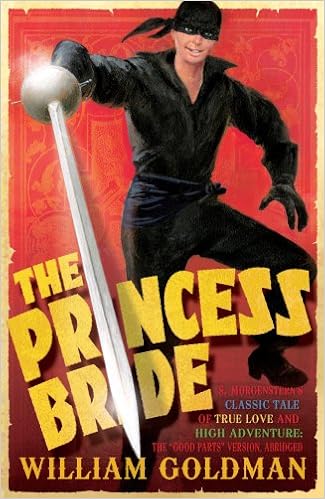
The Princess Bride by William Goldman

Image result for princess bride book
[X]


Another one that's probably better known by the film adaption, and the many, many memes it generated. (Incidentally in this case, I'd really recommend watching the film before reading the book. The film's good, and has a delightfully cheesy cult-movie quality to it, but the book has a lot more in the way of detail. Reading it after seeing the film is essentially like getting a whole load of extra backstory.)

Taking place in the (fictitious) Renaissance European nation of Florin, the story begins when Buttercup, a young and somewhat bratty farm girl, discovers true love with Westley, the farmhand she likes to boss around. Fate conspires to break the two apart as Westley is captured by pirates at sea, assumed dead.

Years later, Buttercup reluctantly agrees to marry the prince of Florin, in the knowledge that she doesn't have much of a choice in the matter and will never love again in any case. She is subsequently captured by a criminal trio in a supposed plot against the throne, and the ensuing madcap and hilarious adventures constitute the plot.

'It's still my favorite book in all the world,' the novel opens, 'And more than ever, I wish I had written it.' The story employs a framing device wherein Goldman is 'abridging' an existing novel - a scathing, but also allegedly long and boring, political satire for adults - into an adventure story that's more accessible to children. To be clear, The Princess Bride is written by William Goldman, and there is no S. Morgenstern or original story.

The meta framing device allows the author to insert himself at points, talking about how he deliberately cut this or that passage because 'Morgenstern' made it too long and detailed. Something that could easily have interrupted the flow or threatened the suspension of disbelief actually works rather well, as the descriptions of the 'removed' passages are entertaining in their own right. There's also the fact that side characters get as much attention and backstory as the main couple, which is a nice touch (somewhat lacking in the film.)

It was adapted into film by Rob Reiner in 1987.


Neverwhere by Neil Gaiman

Image result for neverwhere book
[X]

My favourite of Neil Gaiman's books (with Anansi Boys and Stardust being close contenders, if you're wondering). This story originated when Gaiman and Lenny Henry devised a TV series for the BBC, set in the urban fantasy realm of 'London Below.' As a result of some executive meddling, the series wound up not exactly lining up with Gaiman's vision, and he decided to write it in book form as a companion novelisation.

From this we get Neverwhere, the story of a young, good-natured Scottish businessman living in London who finds himself thrown into a strange parallel version of the big smoke after he unknowingly rescues one of its denizens.


While on the way to an important dinner, Richard Mayhew discovers an injured and distressed young woman curled up on the pavement, and in a snap decision that will alter his life forever, takes her back to his flat. We discover that the girl - named Door - is the daughter of a mysterious nobility, and that her family has been murdered by a pair of terrifying hitmen. The two are still after her and now, by extension, Richard. And his problems don’t end there, as he discovers that ever since encountering his new friend, he’s become virtually invisible. Cabs don’t stop for him, nobody recognises him at work, and an estate agent is showing prospective buyers around the flat he still lives in.


There ensues Richard’s passage into London below, whereupon he and a vivid, peculiar cast of characters embark on a quest to discover who murdered Door's parents, and to establish whether there's any way of getting Richard back to the London he knows.


There's a bizarre kind of familiarity that's frequently present, wherein nearly every cliched aspect of London life crops up somewhere with a new strange meaning. It contrasts a comically familiar brand of Britishness with the strange and often sinister realm of fantasy, all viewed through Richard’s nonplussed eyes.

It manages to be funny and terrifying in equal parts, with characters presenting themselves as creepy and darkly comical by turns. Richard himself starts off as kind, endearingly dorky and somewhat bumbling, and manages to retain some of these traits until the end of the story, although not all of them. In a lot of ways I identified with him a little too much.

And although I have a certain degree of attachment to nearly all of the characters, the Marquis de Carabas deserves a special mention just for being such a magnificent snarky bastard. He got himself a well-deserved spinoff story in 2015, in the form of the novella How the Marquis Got His Coat Back. which is also well worth checking out.


For the record, I'd recommend reading this on the tube. 

Saturday, 24 December 2016

Playlist of the Month: Christmas Edition

I wanted this to be long.

I wanted to talk at length about the songs I picked, and why I chose those particular songs, and what kind of meanings they had for me and what they reminded me of and so on.

I wanted to talk about choral music and nostalgia, and about how hard it is to believe that The Muppets Christmas Carol only came out in the nineties and wasn't a childhood staple for absolutely everyone, and about how, let's be honest here, it's still probably the best adaptation there is out there. I wanted to talk more at length about how pop culture shaped my experiences of Christmas and about how hey, isn't it weird how the snarky, Bob Rivers-type parody songs sometimes manage to sound more upbeat and happy than regular Christmas music?

I wanted to explain, vaguely apologetically, why I left Fairytale of New York off even though god knows I love both the Pogues and Kirsty MacColl, because it turns up on all the lists. I wanted to talk about how some songs just had too much nostalgia value to leave out, even if I don't really listen to the band that much anymore.

And then I wanted to sign off with some cheesy compliments-of-the-season style platitude, and it would all be very cosy and meaningful and thought-provoking. Something to read in front of the fireplace with a mince pie and a glass of something. (The reader, that is, not me; i can't abide mince pies, they taste awful. Brandy cream, on the other hand, is all that is pure and good in the world.)

I wanted it to be long, but this being the holiday season, time got away from me and I wound up missing my own arbitrary deadline. Here are the requisite five songs. Merry Christmas to all who are celebrating, happy ordinary day to those who aren't.


King's College Cambridge - Sussex Choir


Bob Rivers - Wreck the Malls


Doctor Who Soundtrack - The Stowaway


The Pretenders - 2000 Miles


The Muppets - It Feels Like Christmas


Bonus Song (Because it's Christmas, and sometimes you find an extra thing under the tree)

The Darkness - Don't Let The Bells End


Monday, 28 November 2016

Playlist of the Month

So, a lot of us may be familiar with the concept of The Song.

You first heard The Song on the radio, or on a film soundtrack, or overheard it in a shop, or your friend put it on, or it was on album by an artist you were just getting into. Regardless of where you heard it, The Song immediately becomes your favourite song in the world. You realise that your life, your identity, your very being was incomplete in some indefinable way before you finally encountered The Song. The Song is a part of you. The Song represents something fundamental about your personality. You and The Song understand each other. You will never need to listen to another song again, as long as you live. You must immediately rush out and tell all your friends and family about how much you love The Song, so that they may gain a fuller and more profound understanding of exactly who you are as a person.

You play The Song over and over again, gleefully hitting the replay button every single time. You never tire of it. It sounds as fresh and novel and wonderful every single time you play it. You look forward to getting home at the end of the day, because it means you'll be able to listen to The Song again.

Eventually you begin to feel a little concerned. Is this healthy? Will you listen to The Song too much? Will it eventually become tarnished? Is it technically possible to overdose on a song? You decide to take a break from The Song. You dutifully switch to another song. You listlessly play a few old songs for a while, barely hearing them, thinking about when you can get back to listening to The Song. The other songs feel mediocre, bland and mushy, the musical equivalent of unseasoned mashed potato, simply by virtue of not being The Song. Eventually, you cave, and it's back to repeats of The Song ad infinitum.

And then in a couple of days The Song, whilst still a perfectly good song, loses its gleaming novelty and turns into just another regular old song that you happen to like. A few days, weeks, months later, you find yourself another Song to get excited over.

(Or is that just me?)

In any case, I came up with the idea that, as a cheap somewhat lazy post opportunity, once a month I would post five of the most recent songs that have been The Song for me. (I say most recent, but that may become lax in the event that I get bored, am low on songs, or feel like doing some sort of special nostalgia edition.) I wanted to get the November one in quickly so I could do a Christmas edition this month, so here it is in all its somewhat-hurried glory.

The Cure - Six Different Ways


The Chieftains - The Frost is All Over


Regina Spektor - Ne Me Quitte Pas


Bellowhead - Prickle-Eye Bush


Carter USM - Sheriff Fatman


(Link to album version here)


Monday, 31 October 2016

The Defanging: A History of Comedy Horror

Source
***Warning: contains some gory images***

I love comedy horror. Partly because I'm just slightly too much of a wimp to make a habit of watching straight-up horror, partly because my preferences lean heavily towards comedy in any case, and partly because a lot of it is so damn campy.

A common theme in horror is the idea of normality gone wrong - of mundane, everyday, comforting things somehow getting warped into something unsettling or menacing. Creepy lullabies, possessed children's toys, abandoned nurseries, the idea of a loved one becoming possessed or turning evil, and what have you.

Comedy horror, in a way, inverts this idea. It takes things originally intended to be frightening and transposes them into the realm of the mundane or comical. Comic relief can be a useful tool in horror-dominant media, as the more lighthearted scenes or jokey remarks provide a breather from the macabre. And the genre provides infinite opportunity to deconstruct and send up our well-established and much-loved horror tropes. Hammer horror Dracula who vaunts to suck your blood! will rarely be portrayed seriously now, and a lot of pop culture monsters have similarly reprised their roles in the comic domain (usually portrayed with over-the-top hamminess.)

Comedy horror can fall into a few broad categories. There are the first-and-foremost horror flicks that heavily employ dark humour as an accompaniment (Scream, Drag me to Hell, Jennifer's Body,) the comedy-dominant works which make use of horror tropes (Young Frankenstein, Ghostbusters, Evil Dead) or the broad spectrum of media that falls somewhere in between. Parody and deconstruction crop up an awful lot in all of these types, which I'll get to later.

A Short History

Sending up horror tropes, or the mingling of horror and comedy, is nothing new. Since the early days of horror novels, humour has been intertwined with the sinister. A literary example from the 1800's is Oscar Wilde's The Canterville Ghost, which pokes fun at the already well-established ghost story genre, as a high-class American family reacts primarily with annoyance rather than fear at the spectre who haunts their English mansion. The legend of Sleepy Hollow by Washington Irving (originally published in 1820) has been cited as one of the first great comedy horror novels. 
Image result for the cat and the canary
[X]


In the 1920's and '30s, there were a number of stage plays and silent films which combined comedy with a kitschy horror and/or murder mystery element. A few movie examples include  The Haunted House (1921) The Bat (adapted into film in 1926 from the 1920 Broadway hit, in which a masked criminal dressed as a bat slowly picks off a group of guests searching for loot in a rented house) and The Cat and the Canary (the original play written in 1922 by John Willard, then adapted for screen in 1927 and remade in '39. The plot features a gathering of an eccentric old man's relatives for the reading of his will, and once again featured several characters being offed by a mysterious killer.)

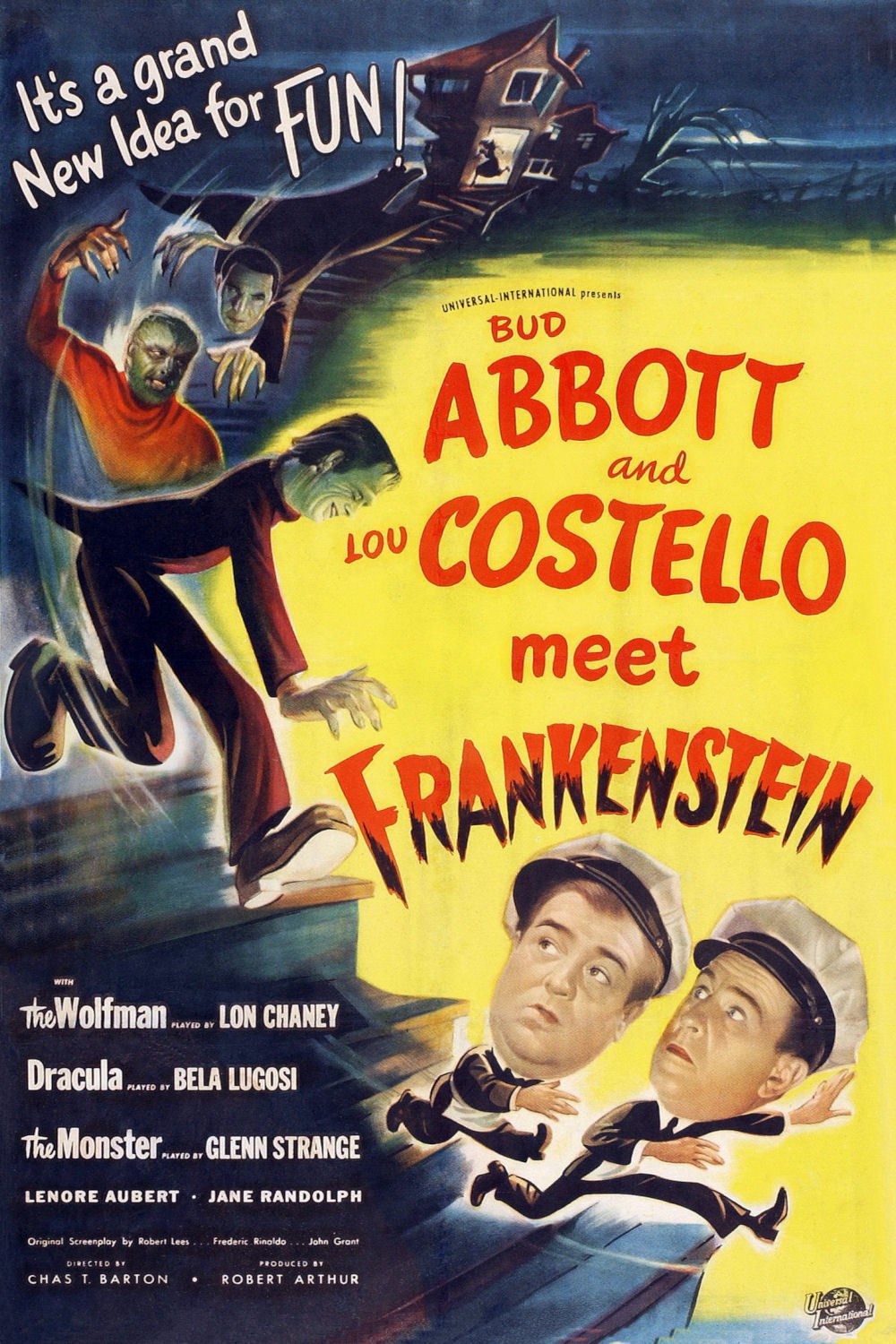
In 1948, Abbott and Costello Meet Frankenstein hit the screens, in which Bela Lugosi reprised his role as Dracula. It has since been identified as the first commercially successful comedy horror film, and cemented the genre as commercially viable, ushering in a new brand of movies (including a series of  'Abbott and Costello Meet X' titles.). These works traditionally featured classic horror monsters, but with very little actual gore or violence. Laurel and Hardy and the Three Stooges occasionally got in on it too, with films such as A Live Ghost in 1934 and Spooks in 1943, respectively.

The sixties brought us sitcoms like The Munsters and The Addams Family, (the latter of which got their own feature film made in 1991, followed by a sequel in '93) which portrayed traditional monsters and gothic horror-style themes in a zany light.

The next couple of decades saw an emergence of over-the-top campiness in its horror comedies, among them Attack of the Killer Tomatoes (1978) and Please Don't Eat My Mother (1972), but with The Rocky Horror Picture Show being the most well-remembered. The 80s continued on this theme, bringing us Little Shop of Horrors, Haunted Honeymoon and the HBO TV series Tales From the Crypt (the overarching themes of the latter could be summed up as 'Blood! Blood and gore! Blood and gore and sex! More sex and more blood and gore! Wheeeeeee!') The '80s also provided us with the first Ghostbusters and Gremlins movies, both leaning towards the comedy end of the scale. According to Box Office Mojo, these two still make the top four best-selling comedy horror slots.

From here we begin to move into spoof territory, which I'll get to in more detail later on.

The Zom-Com


Image result for shaun of the dead
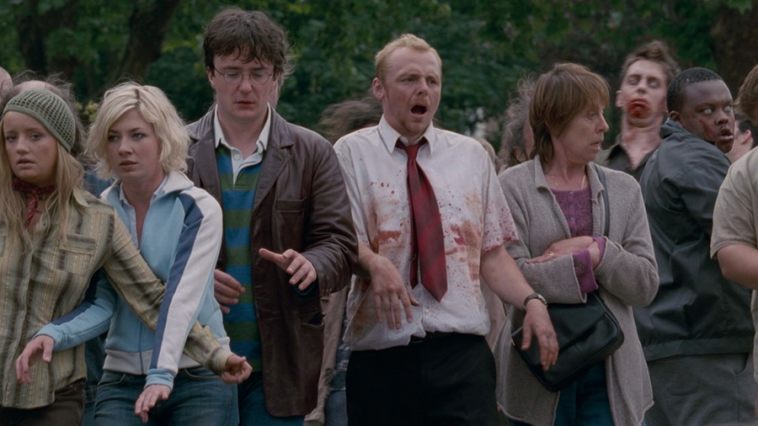
Shaun of the Dead [X]
The zombie apocalypse has made its way into so many comedy flicks it's earned itself a few cutesy subgenre buzzwords of its own, with "zom-com" and "zomedy" being favourites. Possibly because, let's be honest here, there's something inherently funny about zombies, if you write off the whole 'mortal terror' element for a second. Look at 'em, all moaning and lurching around. Funny.
Jean Yarbrough's King of the Zombies (1941) and Gordon Douglas's Zombies on Broadway (1944) are early examples of the genre, dealing with early Haitian-style zombies. A more recent(ish) well-known example would be Shaun of the Dead (2004), which given its prominent romantic subplot, earned itself the title of "zomromcom." (at which point you start to wonder if there's some sort of prefix one-upmanship game going on.) Zombieland (2009) is another popular example. These films had a primarily comedic element, but didn't shy away from gore or avoid more intense and sombre subject matter. (Simon Pegg's character being forced to shoot his own zombiefied mother being a pretty grim example.)

Deconstruction/Parody

As long as there's been horror, there's been stuff that makes fun of horror. Or in some cases deconstructs it more seriously. In fact, a lot of rather cliched horror conventions have now become more familiar to us in the realm of parody than played straight. The creepy castle surrounded by bats that a rain-drenched couple encounter in search of shelter, for example, has taken on a familiar kind of campiness (which The Rocky Horror Picture Show took full advantage of in 1975), and in the wake of a series of send-ups, the classic 'group of teenagers gradually picked off in an isolated holiday spot' slasher movie plot gets spoofed nowadays more often than it's portrayed seriously.
Mel Brooks parodied two of the more well-known classic monster narratives with Young Frankenstein in 1974 and Dracula, Dead and Loving It in 1995. The latter, whilst considerably less successful at the box office, still managed to achieve cult status. It's effectively a condensed version of the original story, with added jokes.


"We should have put newspapers down."
(Fun fact: the actor (Steven Weber) apparently
had no idea that was going to happen.) 

A lot of comedy horror films draw their humour from self-consciously hashing out and lampshading established movie conventions, or taking the traditional horror narrative and reframing it from a different perspective. The Cabin in the Woods (2012) and Tucker and Dale Versus Evil (2010) both make heavy use of this playing on the audience and the characters' established knowledge of traditional horror conventions in order to subvert and mess around with them. Severance  (2006) was a British-German comedy that also riffed on the theme of 'don't go off to stay in a remote location with your mates/colleagues/high school buddies, or you'll all be killed off in various imaginatively gory ways.' The Final Girls (2015) is one of the most recent examples of this particular brand of slasher movie parody.
For a literary example, the Discworld series has probably played with almost every traditional monster trope in existence (they feature a support group for the undead, for one,) either played for laughs or in some cases portrayed more seriously, and therefore deserves a brief mention.

Most recently, we've seen a couple of attempts at reprising old favourites (Goosebumps, the Ghostbusters remake) and if Scouts Guide to the Zombie Apocalypse (2015) is anything to go by, the zomedy genre is still going strong too.

And now I leave you with the song that's been playing in my head since I started thinking about writing this post.
Happy Halloween.


Wednesday, 5 October 2016

A Love Letter to Laika


Image result for laika animation
 (Source)
There's something weirdly satisfying (and slightly terrifying, just when you think about the sheer amount of work that goes into it) about stop-motion animation. I've always been fond of cartoons, and I like a good CGI effect as much as the next person. But stop-motion is a pretty damn impressive art form in itself.

Following the recent release of Kubo and the Two Strings (which I haven't had the chance to see yet, but which will probably get its own mention in a post eventually) I thought it would be a good time to talk a bit about the studio behind some of my most beloved animated productions. I'd like to look back on Laika's three previous major releases (Coraline, ParaNorman and The Boxtrolls), and maybe the potential comparisons between them. In all three films, to some extent or another, there's some underlying message about not judging by appearances, usually presented in a fresh or subversive enough way that we don't feel we're being beaten over the head by it, or that the young target demographic are being talked down to. The characters we may be initially inclined to view as monsters are often revealed to be more complex or misunderstood, but the films also manage to stray away from offering up a heavy-handed message about how humans are the real monsters. The visual style is noticeably different in three, and they all have their own specific brand of quirkiness and originality.

Founded in 2005 with the collapse and re-organisation of Will Vinton Studios, which was known for stop-motion content, the Portland-based company split off into two divisions: Laika Entertainment for films, and Laika House for smaller projects such as advertising. Laika began to make a name for itself in 2009 with the release of Coraline, which was nominated for an academy award for Best Animated Feature.

They're notable for some subtle efforts to feature LGBT characters in their animated family franchises (it's a small step, but it's a step) which I don't want to expand on so as not to risk spoiling parts that really should be witnessed first hand.

Also, for what it's worth, I used to dislike both this song and the band behind this one before Laika films used both in their closing credits, and I played both on a loop pretty much constantly when I was writing this piece up. If that doesn't attest to their greatness I don't know what does.


Coraline
Source

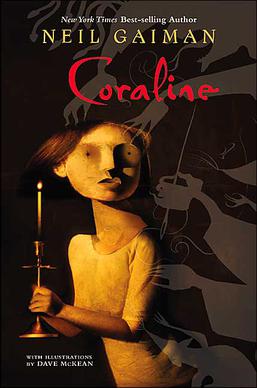
Often compared to Alice in Wonderland and occasionally mistakenly attributed to Tim Burton, Henry Selick's dark fantasy adaptation of Neil Gaiman's 2002 novel sees Coraline - a young girl who's just had to move to an isolated area with her overworked parents, who are ignoring her - long for a better, more exciting life. And a little door in her bedroom leads into what appears to be just that - an indulgent fantasy world that resembles a brighter and more entertaining version of her own home. There's only one odd thing about it: all the people in this world - replicas of her own family and friends - have black buttons for eyes. When the new world takes a turn for the sinister, Coraline must use all her wits and courage to escape.

One of the things I particularly liked about this one (besides the visuals, which we'll get to in a second) was the fact that Coraline - unlike some child protagonists - is never portrayed as unrealistically angelic. She acts the way you might expect a real kid - specifically a bored, disgruntled twelve-year-old - to act. She's occasionally a little bratty and mean-spirited, but it never gets to a point where she becomes actively unlikable. The characters we're supposed to root for aren't perfect, but their hearts are consistently in the right place.
Image result for coraline book
(Source)

I feel I can't talk about this particular film without talking a little bit about its qualities as an adaptation. So in the interests of writing a more fleshed-out account, I decided to sit down and re-read the book (which I'd previously flicked through a few years ago after seeing the film.) And I realise that this next thing I'm going to say might well result in me getting my book-nerd license permanently revoked, especially considering the fact that I love Neil Gaiman, and his works tend to be in my top go-to list of books to gush about at parties. All that said, however...

...The film was better than the book.

That's not to say the book wasn't good. It's definitely worth a read in its own right, and there are a few little touches that I missed in the film. But overall, the film benefited hugely from having a visual element, and whereas Coraline's first encounter with the Other World is more explicitly sinister in the book (the Other Mother already looks a little off even without taking the button eyes into account - she's tall and thin, with claws for hands and slightly-too-sharp teeth; Coraline is evidently uncomfortable from the get-go) the creepiness and sense of not-quite-right manifest themselves more subtly and overtime in the film.
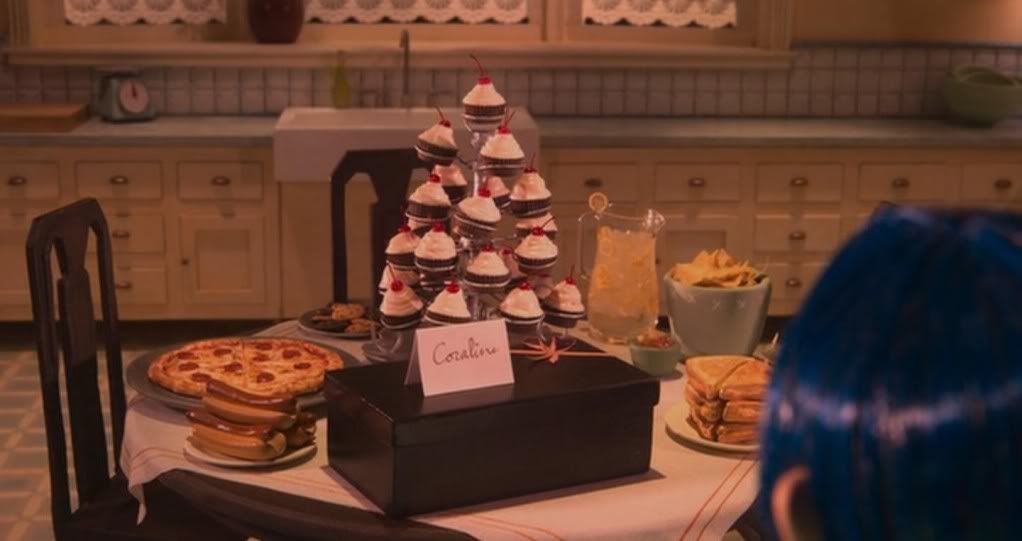
Can't lie, I'd be tempted. Source

The story transposes beautifully into a visual medium, particularly an animated one. It's easy to understand Coraline's initial desire to spend more time in the Other World (although she's still visibly apprehensive at first), since we get to experience the full impact of its beauty and escapism along with her. Just look at the garden scene, for example, or the indulgent food imagery.

It probably helps that Gaiman was heavily involved in aspects of the production and approved certain changes - such as the inclusion of Coraline's friend Wybie - being made in the film. In fact, Gaiman actually requested himself that changes be made in the film adaptation, remarking that Selick's original script was too similar to the source material. Adding an extra character was beneficial to the film if only for exposition purposes, and the added inclusion of Wybie's voiceless counterpart in the Other World adds a whole extra layer of creepiness - it's one of the early indications that something is off about the fantasy world.

The film also adds a few extended trips into the Other World, and puts Coraline's parents and their tendency to ignore her a little more into perspective (they're dealing with financial worries and approaching an important work deadline, as well as moving stress and her mother recovering from an injury.) The end product achieves something that film adaptations don't always manage: it stands up perfectly well as a film in its own right, instead of just coming off as a transposition of the book. And really, what else can you hope for?
       

ParaNorman

Source
A subversive take on your classic horror flick, with a few affectionate nods to the cheesy zombie apocalypse B-movie. Directed by Sam Fell and Chris Butler, it manages to be simultaneously more comedic (which includes getting a lot of adult humour past the radar) and even darker than its predecessor.

The basic premise is that Norman, a young boy living in a small town that's still cashing in on an ancient witch legend, has the ability to talk to ghosts. When a centuries-old curse causes a group of long-dead puritans to rise up as zombies, Norman and his ragtag group of companions have to deal with it, and uncover a horrifying secret in the process.

This one's interesting for a few reasons. For a start, unlike the other two films which both have a very clear villain, the characters and motivations in ParaNorman are more complex. Far from being a simple juxtaposition of good vs evil, it's a lot more ambiguous as to exactly whose side you want to be on, and it never oversimplifies the ideas or talks down to its audience.
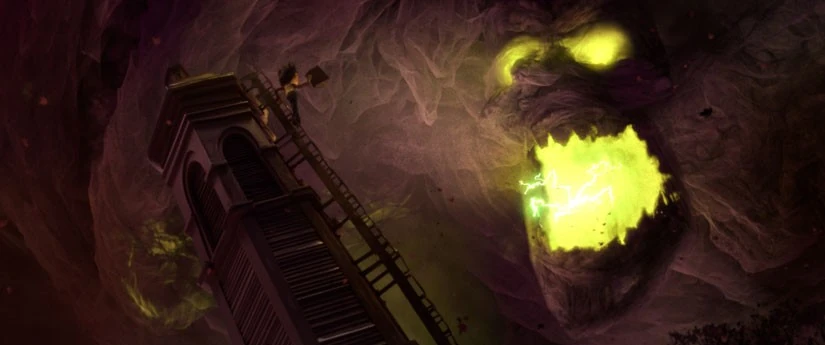
The legendary witch. Source
In some ways, the would-be antagonists could be thought of as an inversion of the Beldam in Coraline. As with its predecessor, true forms are often shrouded or distorted, but whereas Coraline's villain starts out looking (mostly) ordinary and benign, disguising a monstrous true form, the monsters in this film turn out to be not all they seem (although going into any more detail would give the entire game away.)

Norman himself is presented as a fairly ordinary, good-natured straight-man protagonist, despite his supernatural powers, although not to the point where he becomes saccharine or unrealistic, and he does have his snarky moments. Most of the humour and conflict comes from other characters acting up around him. There's something weirdly heartwarming about watching him chat to the various neighbourhood ghosts on his way to school, even if it does cause bystanders to look on with concern as what appears to them to be a boy ducking around empty space and talking to thin air.

The film's full of nice little touches, including a good few subtle visual gags that warrant at least one rewatch. There's a bit about zombies experiencing culture shock after being confronted with the modern world several hundred years after their deaths, which is legitimately hilarious.
ParaNorman might be primarily a horror-comedy, but that certainly doesn't mean it shies away from heavier subject matter. The comedy offsets a very grim backstory (but again, going to far into detail would spoil it.) Characters, dead or alive, are more complex and multifaceted to be easily divvied up into good and evil. There are strong themes of fear and bullying that are interwoven into the story.

For the record, ParaNorman was my personal favourite out of the three.


Boxtrolls


Image result for boxtrolls
(Source)
Made in 2014 and directed by Graham Annable and Anthony Stacchi (loosely based on Alan Snow's novel Here Be Monsters!) this one stands out for being, generally speaking, a little less supernatural than its predecessors (besides the invention of the boxtrolls themselves and the eccentric, steampunky, vaguely Dickensian fictional town in which it's set segues into a fantasy land.) It's also somewhat less dark than the others, although to be fair, it's been set a pretty low bar. There are definitely moments of "...They wouldn't really do that in a family film, would they?... would they?"

The premise is this: the town of Cheesebridge has been misguidedly terrified for years of Boxtrolls, little underground-dwelling monsters who have (for reasons as yet unrevealed to us,) acquired a human child named Eggs who they are raising as their own, resulting in an unconventional and slightly weird but happy and loving family. The widespread fear of boxtrolls is perpetuated by Archibald Snatcher, an exterminator plotting to kill off all the creatures to gain a higher social status.


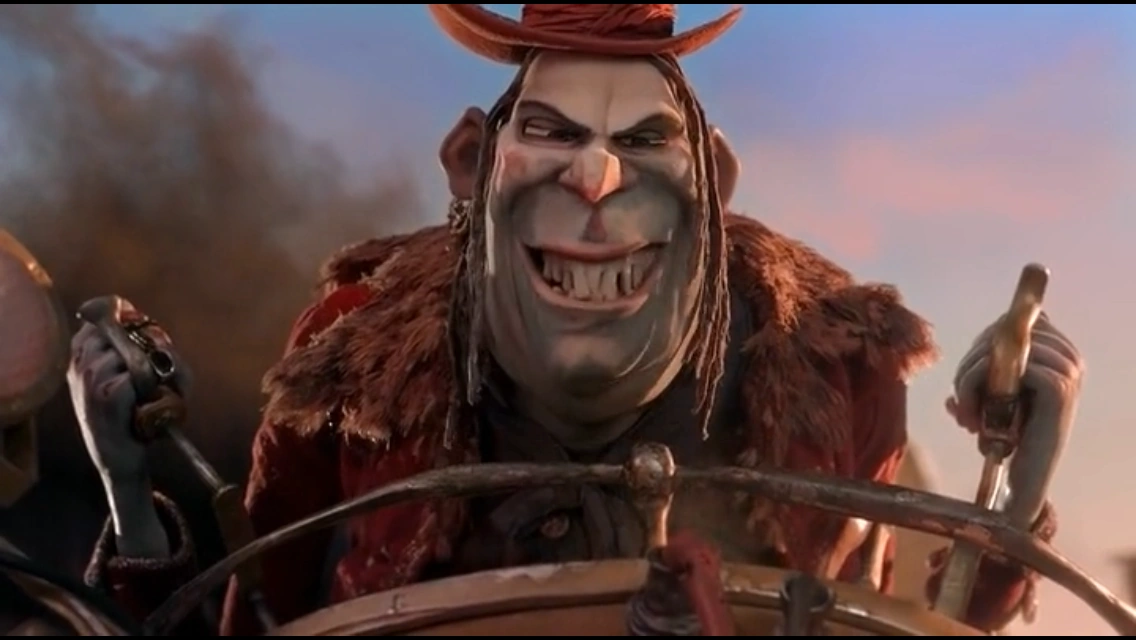
Image result for boxtrolls snatcher
Our villain du jour, Archibald Snatcher (Source)
And social status is a key theme here, with the idea of those who would do anything to climb the social ladder being explored at both the comedic and sinister ends of the scale. In this society, those at the top of the hierarchy are characterized by their white hats and access to the prestigious cheese-tasting room. The villain's desperation to worm his way into the elite class is his primary motivator here, to the point where he's determined to eat cheese (a marker of high society in this world) despite being violently allergic (resulting in some mild gross-out comedy.)

Although a bit of a moustache-twirler (we can tell exactly what kind of a person we're dealing with practically from his first appearance, although the other characters can't,) Snatcher has some depth as a character, and if he wasn't so horrible the audience could almost be persuaded to sympathize with his motives, especially considering how the upper class are portrayed. Like the villains in the previous two films, Snatcher's appearance and true nature are somewhat disguised, at least to the other characters; unlike the previous two, there's nothing supernatural about him. He also has the classic evil henchmen posse, which is also given a bit of an original spin, as we're given a look at antagonists who genuinely believe they're the good guys fighting the forces of evil, and increasingly question this as the story goes on. Whilst played for laughs, it's another thing you won't often see in a kids' film. And, as with ParaNorman, the town is seen rather distastefully using a past tragedy as a means for entertainment, and possibly a method of cashing in.

Image result for boxtrolls
(Source)
And, oh god, the scenery. I was lucky enough to get to see this one on the big screen, and the visuals, especially the boxtrolls' underground dwelling (ironically, considering it's built out of rubbish by a bunch of grubby insect-eating goblins) are an absolute delight. The characters are adorable, and the message at the heart of the film is about the courage of being true to oneself - we define ourselves by our actions, more than anyone or anything else does. Also, there's a scene during the end credits that hilariously shatters the stop-motion fourth wall, as two of the characters have a philosophical chat about the possibility that they're all really just being controlled by giants...